DIY Water Damage Cleanup in Indian Lake: Why Pros Matter
When water spreads across your floor at 11pm, the first instinct is to grab towels, a shop vac, and a box fan from the garage. That instinct is not wrong, but it is rarely enough. In Indian Lake, most water losses involve hidden moisture in subfloors, wall cavities, and insulation that no rental fan can reach. By the time the carpet feels dry to the touch, the framing underneath can still sit at 25% moisture content, which is well above the 16% threshold where mold begins to colonize.
At Indian Lake Water Restoration, we have walked into hundreds of Indian Lake homes where a homeowner did everything right for the first 24 hours, then discovered swollen baseboards, warped hardwood, or musty smells two weeks later. The cleanup looked finished. The damage was not. This guide breaks down what DIY can handle, what it cannot, and where the line sits between a smart weekend project and a job that needs IICRC certified equipment. If we can talk you through a small cleanup over the phone, we will. If your situation needs a crew, we will tell you that directly.
Quick Answer: When DIY Works and When It Fails
DIY water cleanup in Indian Lake works for clean water spills under 10 square feet, caught within the first hour, on non porous surfaces like tile or sealed concrete. Everything beyond that, including soaked carpet, drywall contact, or any gray or black water, requires professional drying and sanitization to prevent mold and structural rot.
The Water Category Question
IICRC sorts water into three categories, and the category dictates whether DIY is even legal under most insurance policies.
- Category 1: Clean water from a supply line. Safe to handle with PPE.
- Category 2: Gray water from appliances or sump discharge. Contains contaminants.
- Category 3: Black water from sewage, toilet trap, or ground flooding. Hazardous.
Category 2 and 3 water require professional handling. No homeowner should touch sewage without proper PPE, containment, and disposal protocols. Category 1 water can also degrade into Category 2 after 48 hours of contact with building materials, so even a clean supply line break becomes a contamination job if drying is delayed.
What Professional Restoration Actually Includes
The difference is not just bigger fans. It is a measured process built around the IICRC S500 standard.
- Moisture mapping with thermal imaging and pin meters
- Category assessment of water (clean, gray, or black)
- Truck mounted extraction that pulls water from pad and subfloor
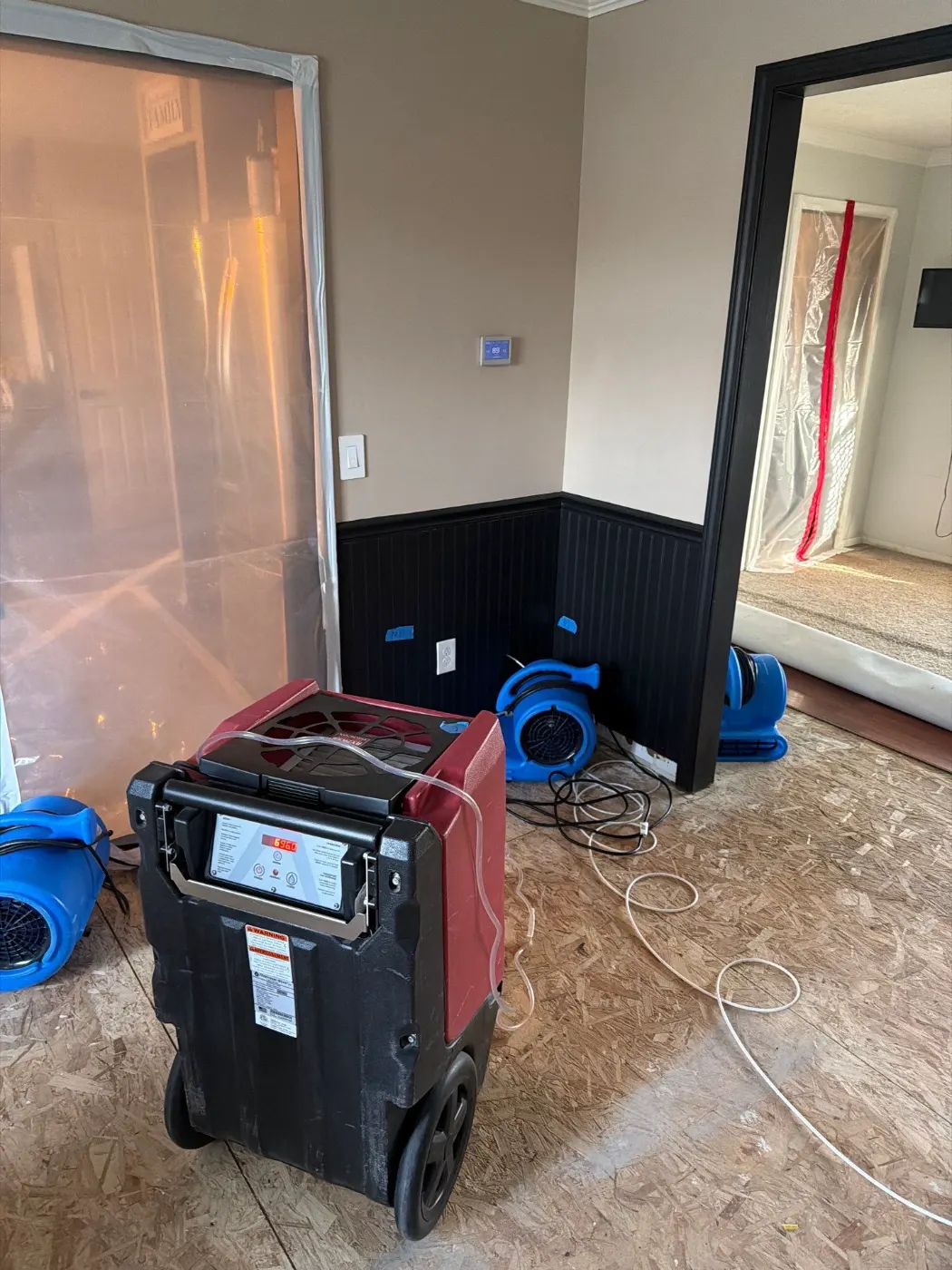
- Commercial air movers placed at calculated angles and spacing
- LGR dehumidifiers sized to the affected cubic footage
- Daily moisture readings logged for insurance documentation
- Antimicrobial application on contaminated surfaces
- Controlled demolition only where drying in place will fail
- Content pack out and off site drying for salvageable items
A typical Indian Lake water loss takes 3 to 5 days to dry properly with this equipment. The same job with box fans and a household dehumidifier often takes weeks, if it dries at all.
The DIY vs Professional Breakdown
Here is a clear side by side based on what we see in Indian Lake homes every week.
| Situation | DIY Reasonable | Call a Pro |
|---|---|---|
| Clean water, under 10 sq ft, caught fast | Yes | Optional |
| Carpet soaked for over 24 hours | No | Yes |
| Water touching drywall or baseboards | No | Yes |
| Sewage backup or toilet overflow | Never | Always |
| Basement flood over 1 inch deep | No | Yes |
| Water from upstairs ceiling leak | No | Yes |
| Hardwood floors with standing water | No | Yes |
What Homeowners Get Right
Most Indian Lake homeowners handle the first hour well. They:
- Shut off the water at the main or local valve
- Cut power to affected rooms at the breaker
- Move furniture and electronics off wet flooring
- Pull up area rugs and hang them to dry
- Document everything with photos for insurance
- Place towels at thresholds to stop spread
- Lift drapes and fabric skirts off wet carpet
- Open windows if outdoor humidity is lower than indoor
These steps protect your property and your claim. They are exactly what we would tell you to do while we are en route.
What DIY Cannot Do
The gap between mopping up and actually drying a structure is wider than most people realize. Standard household tools cannot reach the moisture that causes long term damage. Here is what gets missed:
- Moisture inside wall cavities behind baseboards
- Saturated insulation that holds water for weeks
- Subfloor and joist moisture under finished flooring
- Pad and tack strip moisture under carpet
- Hidden moisture above ceilings from upstairs leaks
- Bacterial contamination in gray and black water
- Trapped vapor inside cabinet toe kicks and built ins
Equipment You Cannot Rent at the Hardware Store
Home improvement rentals carry carpet blowers and small dehumidifiers, but they are not built for structural drying. Professional gear differs in three important ways:
- Air movers push 2,800 to 3,400 CFM, roughly triple a rental unit
- LGR dehumidifiers pull water out of air below 40 percent humidity, where rental units stall
- Injection drying systems force air into wall cavities and under hardwood without demolition
Without this equipment, surface moisture evaporates but cavity moisture stays put, which is how second visits and mold callbacks happen.
When to Call Indian Lake Water Restoration Instead of Renting Equipment
Pick up the phone if any of these apply to your Indian Lake property:
- Water has been present longer than 24 hours
- Drywall, baseboards, or insulation are wet
- You smell musty odors after surfaces look dry
- Hardwood floors are cupping or buckling
- The source is sewage, a toilet, or a sump failure
- Your insurance carrier is involved
- The affected area is larger than one room
Our crews dispatch across Indian Lake within 2 hours in most cases, with full extraction, drying, and documentation handled in one visit.
The Real Cost of Doing It Wrong
Skipping professional drying does not save money. It usually doubles or triples the eventual repair bill. Here is what we see in Indian Lake second call situations.
Mold Growth Within 48 Hours
Mold spores activate on wet organic material within 24 to 48 hours at temperatures above 60 degrees. Once mold colonizes drywall or framing, remediation costs jump from a few hundred dollars in drying to several thousand in containment, removal, and rebuild. Our guide on how fast mold grows after water damage walks through the exact timeline.
Structural Decay
Wet subfloors swell, lose nail hold, and eventually rot. Hardwood floors cup, then crown, then crack. Drywall paper feeds mold while the gypsum behind it crumbles. Engineered flooring delaminates as the glue layers separate. Cabinet boxes made from particleboard swell at the base and never recover their shape. None of this is visible at hour 24. All of it shows up at month two, usually right after a heat wave drives moisture back out of the framing.
Insurance Claim Problems
If your policy covers the loss, insurers expect mitigation per IICRC S500 standards. DIY drying with consumer fans rarely meets that bar. When a mold claim appears months later, adjusters often deny it as a secondary loss caused by inadequate mitigation. Reviewing how to file a water damage insurance claim before you start cleanup protects your coverage.
The Honest Bottom Line for Indian Lake Homeowners
The pattern in every story above is the same. The homeowner did something reasonable, then waited. Waiting is what turns a 1,500 dollar mitigation into a 12,000 dollar reconstruction. If water has been sitting longer than a few hours, or if it came from anything other than a clean supply line, get eyes on it. Indian Lake Water Restoration dispatches local crews across Indian Lake and in most cases within 2 hours of your call, with moisture mapping, documentation for your insurance carrier, and a straight answer about whether you actually need us. Call when you are not sure. The inspection is free, and the conversation costs you nothing.
Frequently Asked Questions
Is it ever okay to clean up water damage myself in Indian Lake?
Yes, for very small Category 1 spills under 10 square feet on hard flooring, caught within an hour or two. Anything that touches drywall, carpet, subfloor, or cabinets should be inspected by Indian Lake Water Restoration before you decide.
How fast does mold actually start growing after water damage?
Mold colonies can establish within 24 to 48 hours when relative humidity stays above 60%. That is why Indian Lake Water Restoration prioritizes rapid dispatch across Indian Lake and uses commercial dehumidification to drop conditions below the mold growth threshold quickly.
Will my insurance pay less if I tried DIY cleanup first?
It can. Adjusters look for evidence of timely mitigation and proper drying documentation. Without moisture logs and proper scope, claims get reduced. Indian Lake Water Restoration provides the full documentation package your Indian Lake insurer expects.
What equipment do professionals use that I cannot rent?
LGR dehumidifiers pulling 130 plus pints daily, commercial air movers, thermal imaging cameras, calibrated moisture meters, and HEPA air scrubbers. Home store rentals are undersized for almost any real loss.
How much does professional water damage restoration cost in Indian Lake?
Most residential jobs run between $2,500 and $7,500 depending on category, square footage, and materials affected. Indian Lake Water Restoration provides free inspections and works directly with your insurance carrier across Indian Lake.
Have a restoration question?
Our IICRC certified Indian Lake crew is ready to help. Free assessments, estimate based on what we can sees, no pressure.